All case studies
Defence & AI2023

Project ARGUS

Computer Vision for Perimeter Intelligence

Air-gapped multi-camera surveillance platform with real-time threat detection for a classified defence installation.

Headline outcome

97.8% detection accuracy · 0.18% false positive rate · 40+ concurrent feeds

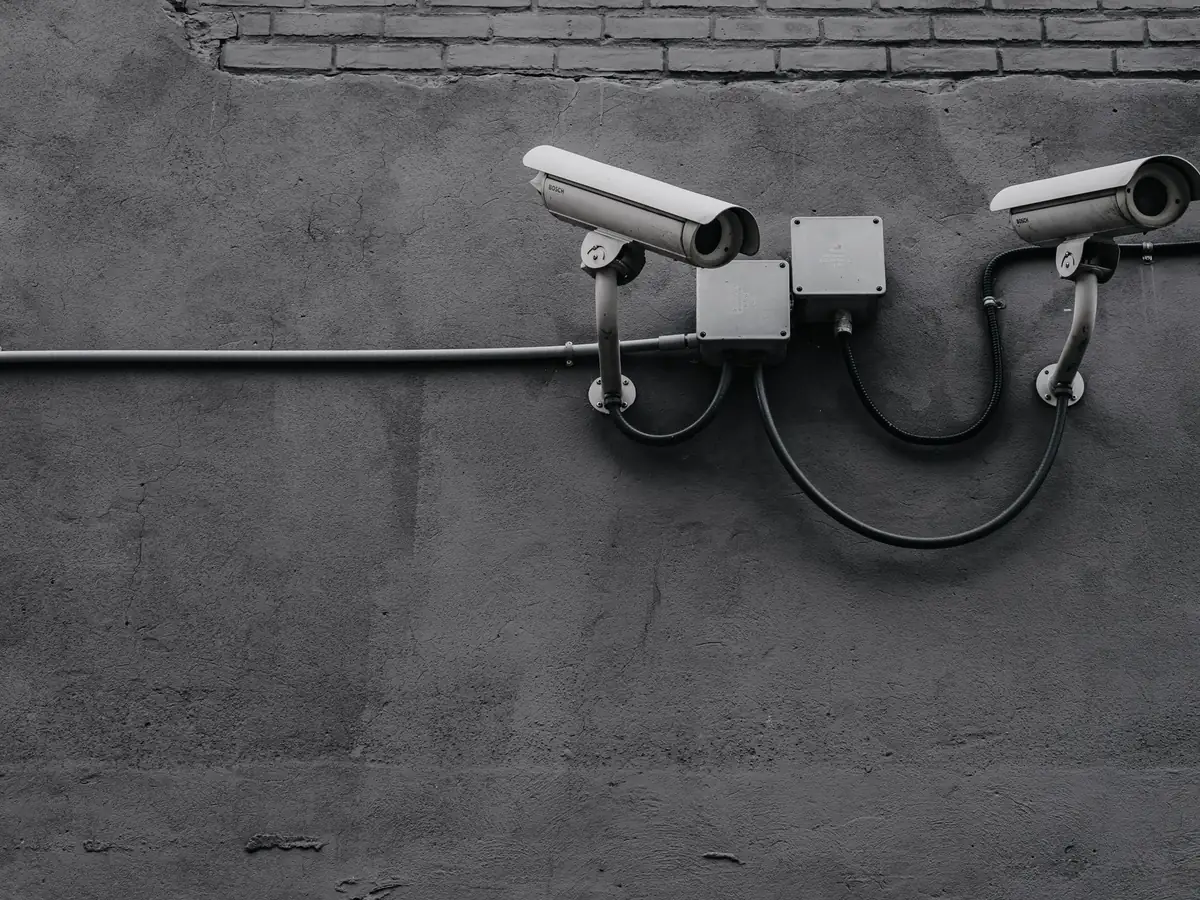
Two bullet cameras on a bracket against a bare concrete wall
Illustrative photography. No imagery on this site is from a client environment.
YOLOv8xPyTorchNVIDIA A100Air-gappedReactFastAPILAN-only

Overview

A classified government client required a perimeter intelligence system capable of detecting, classifying, and alerting on threats across 40+ concurrent camera feeds — entirely offline, with zero cloud dependency.

Challenge

The system had to operate in an air-gapped LAN environment with no internet access. All AI inference had to run on-premise on hardened GPU hardware. False positive rates had to be below 0.3% to avoid alert fatigue in a high-stakes operational context.

Solution

We deployed a YOLOv8x-based detection pipeline optimised for edge inference on NVIDIA A100 clusters. Custom training data was generated from the installation's actual camera feeds. A React-based control room dashboard provided real-time alerts, camera management, and audit trails — all running on an isolated intranet.

Outcome

The system achieved 97.8% detection accuracy with a 0.18% false positive rate. Deployed across 3 installation zones. Now manages 40+ simultaneous feeds at sub-200ms latency. 100% LAN-only — no data leaves the installation perimeter.

Measured

97.8%
detection accuracy
0.18%
false positive rate
40+
concurrent camera feeds
2023
in service since

The constraint that shaped it

The site has no route to the internet, and it never will. That single fact removes cloud inference, hosted model updates, remote diagnostics and vendor telemetry in one stroke — so the compute had to be sized and bought for the worst sustained hour, the evaluation had to run inside the perimeter, and the update procedure had to work over signed media handled by the people on site. Every other decision is downstream of it.

How it was built

Verification, not benchmarks

Accuracy on a public benchmark says nothing about a fence line at three in the morning. Detection was evaluated inside the perimeter, on the same GPU hardware the system runs on — not a laboratory rig with a different memory profile — because an air-gapped site leaves nowhere else to run it. The false-positive figure was treated as the harder number, because the cost of a wrong alert is an operator who stops trusting the screen. 0.18% is the measured rate at 40+ concurrent feeds.

What the operator actually does

The control room does not run a model; it works a queue. Detections arrive graded, the relevant camera comes forward, and an operator acknowledges or dismisses in one action — the interaction is built for someone on a rotating watch who did not choose the software and will not be sent on a course. Camera management, credentials and retention sit in the same interface rather than a second tool. Every acknowledgement, dismissal and configuration change lands in an audit trail an assessor can read end to end.

Updating a system with no route out

There is no dial-in, no telemetry and no package mirror. Model weights, application builds and configuration move in on controlled media, signed, and are staged and verified inside the perimeter before anything is cut over. The previous version stays recoverable, because the rollback path is the only support path available on the night it is needed. Update, backup and incident procedure are documented and handed over to the people who hold the site, with the runbook and training records, since the first responder to a fault will always be them and never us.

What was hardest to get right

Not detection — suppression. A perimeter generates motion all night: foliage, rain on a lens, insects at an infrared illuminator, headlights on an access road. Anything that fires on those is abandoned inside a week whatever its accuracy figure says. The work went into motion gating, class discipline and tuning against the site’s own nuisance footage, then into proving the result held at 40+ concurrent feeds rather than on one well-lit camera. The accuracy number was reachable early. The 0.18% took the rest of the programme.

Stack, by concern

AI & inference

YOLOv8xPyTorchNVIDIA A100On-premise GPU inference

Application

FastAPIReactPostgreSQL

Deployment

Air-gappedLAN-onlyZero egress