All services

AI Engineering

Models that work in production.

LLMs, RAG, computer vision, agentic AI.

1.4M+
Users served by AI
<100ms
Inference latency target
5+
Production AI systems
80%+
Eval dataset accuracy
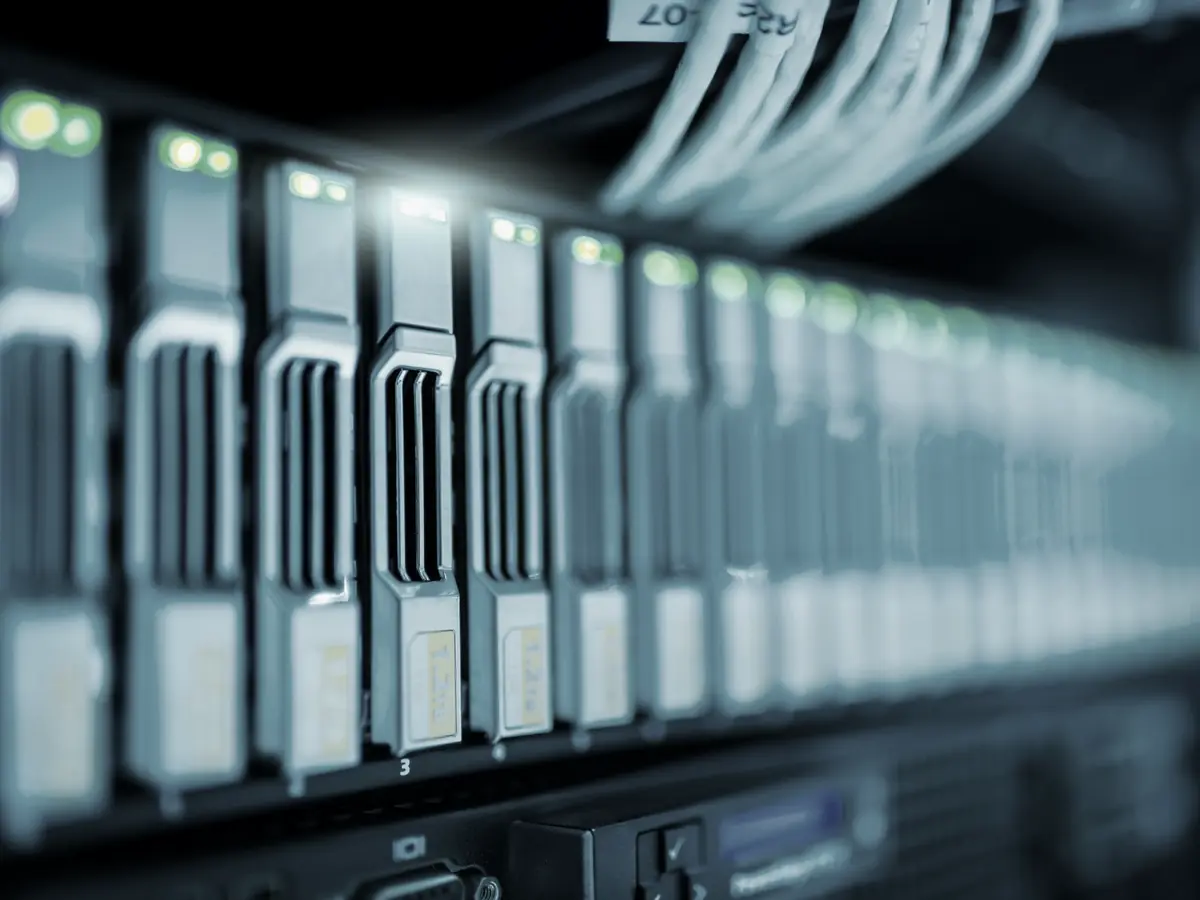
A row of accelerator cards seated in a rack chassis, status LEDs lit

Overview

AI engineering is not prompt engineering. Building production-grade AI means fine-tuning models on domain-specific data, constructing retrieval pipelines that stay accurate at scale, and deploying systems that degrade gracefully under load. We have done this for defence clients with classified data and sports platforms with 1.4M active users. The engineering is the same. The stakes are different.

The Problem

Most AI projects stall at the prototype stage. A demo works in a Jupyter notebook but falls apart under real data, real users, and real latency requirements. Teams discover their RAG pipeline hallucinates on edge cases, their model drifts after a few weeks, and their inference costs are 10× the budget.

Our approach

We design AI systems with production in mind from day one. Evaluation datasets and regression benchmarks before training. MLflow experiment tracking from the start. Quantisation (GGUF/ONNX) to hit latency targets. Staged rollouts with canary deployments. RLHF for models that need human preference alignment. For RAG systems, we benchmark retrieval accuracy at multiple chunk sizes and embedding models before committing to a stack.

Deliverables

  • LLM fine-tuning (LoRA, RLHF)
  • RAG pipeline architecture
  • Evaluation dataset and benchmarks
  • Model quantisation (GGUF/ONNX)
  • Inference API (FastAPI)
  • MLflow experiment tracking

Tech stack

PyTorchLlama 3 70BMistralLangChainRAG PipelinesGGUF QuantisationYOLOv8xWhisper ASRHugging FaceMLflowRLHFOpenCV

In practice

The compute budget is the specification

Most AI briefs describe the output and leave the hardware to the end. We invert that. The node is specified against sustained inference — the load a system carries all day, not a benchmark burst — and throughput is demonstrated before procurement is signed. Quantisation, batching and model count are sizing decisions, not optimisations bolted on afterwards. ICCS runs an eight-model fusion stack in roughly 28 GB of VRAM on a single GPU node, and at load it is CPU-bound rather than GPU-bound. That result came from sizing first.

Measured after it ships, not before

A model that was accurate at handover and unmeasured six months later is an unowned liability. The evaluation set is a delivery artefact: held-out data drawn from your own environment, precision and recall reported per class, and a regression run on every model, dependency or hardware change. MLflow holds the experiment history and model registry, so any result traces back to the weights, the data and the parameters that produced it. MINERVA’s 94% extraction accuracy is a measured figure against a set like that — not a demo score.

Where it fails, and how that is caught

Production AI fails quietly. A feed degrades, an input distribution drifts, a retrieval returns nothing useful and the model answers anyway. So we instrument for silence as well as for error: liveness heartbeats on the inference engine, per-source circuit breakers, and confidence thresholds that route a weak case to a person instead of guessing at it. Decision paths are written to a tamper-resistant audit log with CSV export, so a disputed output is reconstructed months later from the record rather than from memory.

What you hold at the end

Source code, schema, infrastructure definitions, trained weights, the evaluation set and the runbook — all of it, on an open-source base with no per-seat licence at the platform layer. The stack is deliberately conventional so the platform can be maintained by an engineer who did not write it, including one who does not work for us. Exportability is the test we apply to our own work: if you could not reconstruct your records and history from an export inside one working day, it is not a platform you own.

Where this has run

MINERVA

Sovereign language-model document intelligence over a classified corpus — quantisation, serving, retrieval, evaluation and the offline update procedure delivered as one scope on Llama 3 70B, GGUF and pgvector.

75 days from brief to production. Processing cut from 3 days to 8 minutes, at 94% extraction accuracy.

Krida AI

National-scale athlete and federation platform across 28 disciplines, with the AI layer carrying live selection and performance workload rather than sitting beside it.

1.4 million+ registered athletes, coaches and administrators at 99.97% uptime over three years. Selection cut from six weeks to four days.

EMSPL

Fleet AI with predictive maintenance and live GPS telemetry, since extended into a full enterprise resource platform on a standing monthly retainer with joint IP.

2,400 vehicles under management: 41% fewer breakdowns and 12% fuel saving, across a 24-month partnership still running.

Questions

What buyers ask about this specifically.