All services

Computer Vision

Vision systems that work in the field.

Object detection. Tracking. Edge deployment.

< 50ms
Inference latency
97%+
mAP on client data
5+
Vision systems shipped
Edge
Air-gapped deployment
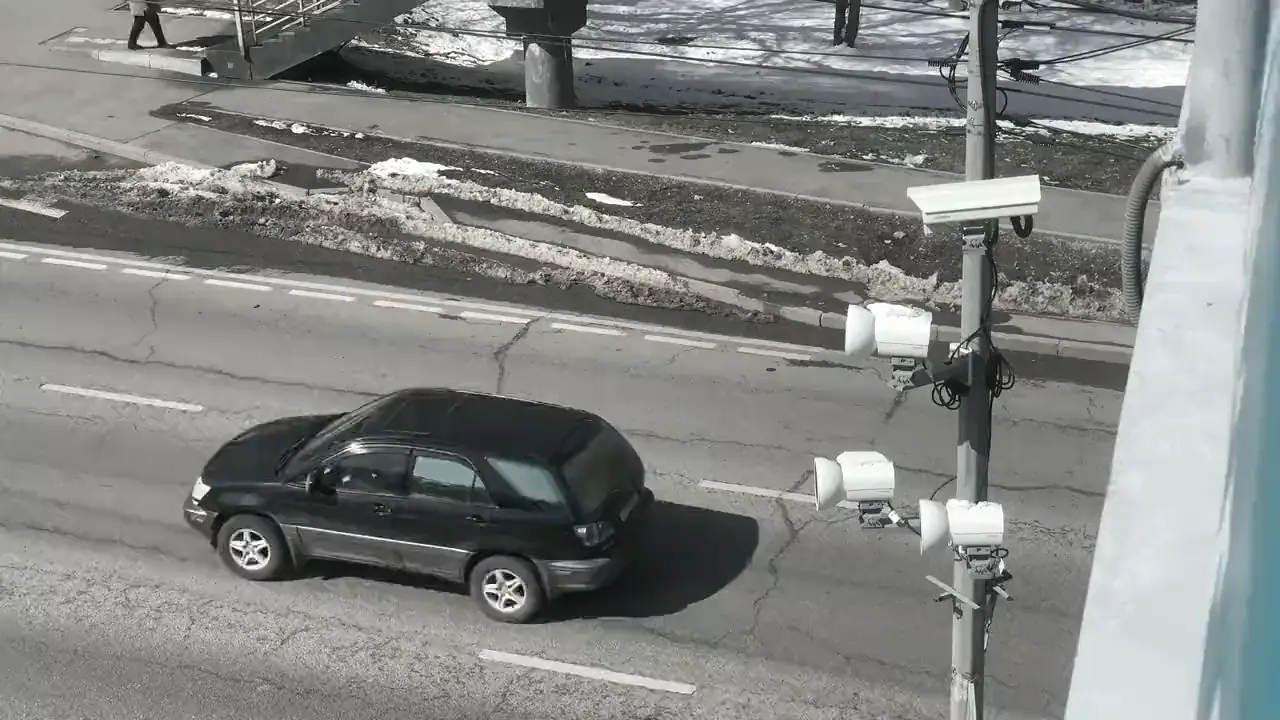
Traffic cameras on a roadside pole as a bus and cars pass beneath
Film: roadside traffic cameras on a public street. Illustrative of the kind of feed a detection stack ingests — not an Artikate installation.

Overview

We build computer vision systems for environments where off-the-shelf models fail — low-light, domain-specific classes, real-time edge requirements, and classified use cases. Our work spans defence perimeter monitoring, sports performance analytics, and industrial inspection.

The Problem

Pretrained COCO models do not understand your domain. A model trained on public datasets misidentifies objects in low-light, thermal, or domain-specific contexts. Real-time edge deployment adds latency and hardware constraints that most cloud-trained models cannot meet.

Our approach

We fine-tune YOLOv8x on client-provided datasets, build custom data annotation pipelines, and optimise for edge hardware using ONNX or TensorRT. For classified environments, all training and inference is on-premise. We maintain evaluation benchmarks and regression test against precision/recall targets on every model update.

Deliverables

  • Custom model fine-tuning (YOLOv8x)
  • Data annotation pipeline
  • Edge hardware optimisation
  • Real-time inference API
  • Model evaluation benchmarks
  • On-premise deployment

Tech stack

YOLOv8xPyTorchOpenCVONNXTensorRTPythonFastAPIDockerNVIDIA CUDA

In practice

The false positive rate is the real specification

Detection accuracy is the figure buyers ask for. The figure that decides whether a system stays switched on is the false positive rate, because an operator woken by noise learns to dismiss the alert. ARGUS ran at 97.8% detection accuracy with a 0.18% false positive rate across more than forty concurrent feeds. Reaching that is architecture rather than a threshold setting: motion gating ahead of inference, fusion instead of one detector’s opinion, three-level grading, and a cooldown policy so one event produces one alert.

One detector is an opinion. Fusion is a decision.

A single detector fails predictably — small distant objects, thermal at night, a class it was never trained on. ICCS fuses eight models with Weighted Box Fusion: a primary detector, a transformer detector, open-vocabulary and grounding models, thermal, sliced-tile inference, a counter-UAS tracker and pose. The full stack occupies roughly 28 GB of VRAM. A global tile budget keeps that cost bounded as feeds are added, so the expensive models run where they earn their place rather than uniformly across everything.

Sized to the feed count, not to the demo

A vision system is specified by how many cameras it must carry at once, and that is rarely the number of cameras installed. ICCS holds 80 configured cameras on a single GPU node with roughly 15–20 concurrently active 1440p streams, and at that point it is CPU-bound rather than GPU-bound — decoding is the limit, not inference. A camera is hot-added in about 60 seconds with no restart. Throughput is proven on your feeds before hardware is bought.

How a blind system is caught being blind

The dangerous failure in surveillance is not a wrong detection. It is a camera that has been nudged, fogged or looped, still returning frames that no longer show what it was placed to watch. Per-camera circuit breakers, an engine liveness heartbeat, and tamper and blind-spot detection are shipped capabilities, not roadmap items. Per-camera segmented recording with hierarchical playback means a disputed alert is replayed from retained footage, and the audit log exports to CSV for whoever asks to read it.

Where this has run

ARGUS

Air-gapped multi-camera perimeter intelligence with real-time threat detection, built on YOLOv8x and PyTorch over NVIDIA A100, with no network path in or out.

97.8% detection accuracy at a 0.18% false positive rate, across 40+ concurrent feeds.

ICCS

The reference platform: multi-model detection fused with sensor ingest, autonomous drone dispatch, offline mapping, recording and access control as one system with one audit log.

80 cameras on a single GPU node, 8+ fused detection models, 4 autonomous drones, 11 shipped capability domains, 100% air-gapped capable. Release v1.25.2, 27 June 2026.

DRISHTI

Integrated surveillance and intelligence platform applying computer vision across fixed and mobile feeds, with review tooling for the operator who has to act on the output.

Live and in service. The same detection foundation is now in development against manufacturing quality assurance at line speed, with fuel and warehouse automation approved and awaiting prototype funding.

Questions

What buyers ask about this specifically.