All services

Sovereign LLM Deployment

Your data never leaves your perimeter.

On-premise LLMs. Air-gapped. No egress.

100%
Data sovereignty
< 3s
Average response time
0
Third-party data transfers
3+
Sovereign LLM deployments
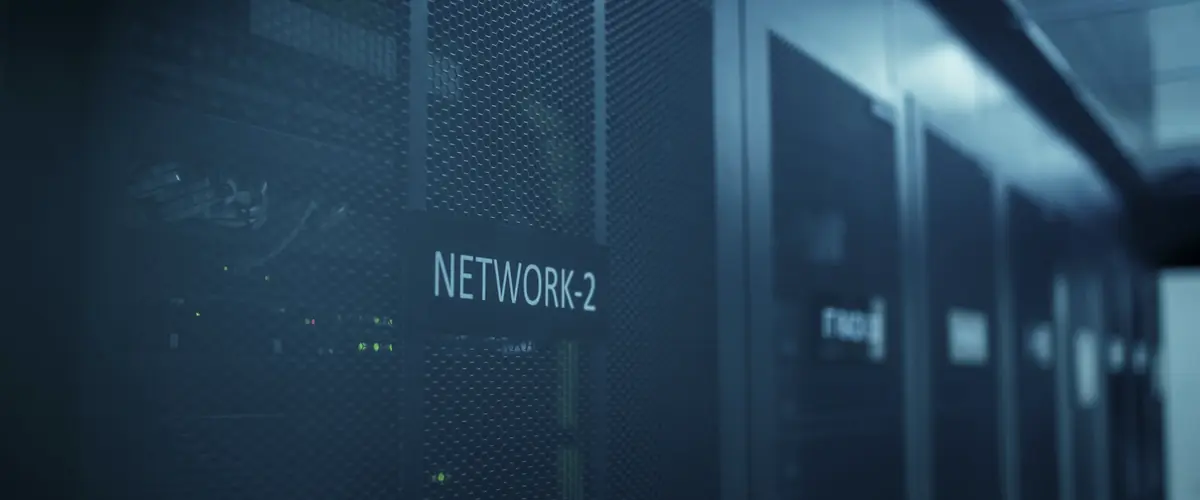
A darkened aisle between network racks, one cabinet labelled by hand

Overview

We deploy large language models entirely within your infrastructure — no API calls to OpenAI, no data sent to Anthropic, no logs on third-party servers. For organisations with classified data, GDPR obligations, or sovereignty requirements, this is the only acceptable architecture.

The Problem

Commercial LLM APIs are not acceptable for legal, medical, defence, or regulated financial data. GDPR prohibits certain data transfers. Classified information cannot leave the perimeter. Yet organisations need the productivity gains of LLMs — internal document search, code generation, summarisation, Q&A.

Our approach

We select the right open-weight model for your use case (Llama 3, Mistral, Qwen, Deepseek), fine-tune on your domain data where needed, quantise to GGUF for efficient CPU/GPU inference, and deploy with a standard API interface. No internet required post-deployment. We handle the full pipeline: hardware selection, model optimisation, API layer, and a simple chat or integration UI.

Deliverables

  • Model selection and sizing
  • On-premise infrastructure setup
  • Model fine-tuning (LoRA)
  • GGUF quantisation
  • Local inference API
  • Integration with existing systems

Tech stack

Llama 3 70BMistralQwenGGUF QuantisationLangChainFastAPIDockerAir-gapped DeployNVIDIA A100

How it runs

Where every step happens.

The argument for a sovereign deployment is not the model. It is that every stage of the request — the index, the weights, the inference, the log — is inside a boundary you control, and that nothing crosses it.

Your perimeter — no egress No inbound path, ever

01 · request

Query enters on the LAN

An operator asks a question from a workstation on the internal network. No hostname outside the perimeter is ever resolved.

02 · retrieval

Retrieval over the local index

Embeddings and vectors are built and stored on site. The corpus never leaves the estate to be indexed.

03 · inference

Generation on your GPU

Quantised weights (GGUF/ONNX) run on client-controlled hardware, sized to the node you already own.

04 · audit

Answer, with its sources and a log line

Every response carries its citations, and every request is written to an audit log that stays on the estate.

A schematic of the deployment topology, not a screenshot. Model updates arrive one-way on controlled media; no inbound network path is opened at any point.

In practice

The sizing is proven before procurement is signed

A sovereign deployment goes wrong at the purchase order rather than at the model. A node specified from published benchmark figures meets a real workload — concurrent readers, long documents, sustained rather than bursty demand — and falls short of it. We size against that workload and demonstrate throughput before hardware is bought. Quantisation is part of the sizing, not a later economy: the open-weight model is quantised to GGUF and fitted to the hardware that will be on site, not the hardware a model card assumes.

Provenance is the acceptance criterion

An answer nobody can check is not usable inside an institution, whatever its accuracy. Retrieval runs locally over the customer’s own corpus in pgvector, and every generated answer carries a citation back to a named source file — so the person reading it verifies the claim instead of trusting the model. Where retrieval returns too little to support an answer, saying so is the correct output. MINERVA was measured at 94% extraction accuracy on a classified corpus under exactly that constraint.

Updating a model with no inbound path

The hard part of an air-gapped deployment is the second year. Model weights, index rebuilds and dependency updates arrive signed, on controlled media, against a documented update, backup and incident procedure — because the alternative is opening an inbound path for convenience and then explaining it during an accreditation review. There is no outbound telemetry, and that is tested with the network interface physically down rather than merely firewalled. If the record cannot leave the country, neither can the prompt containing it.

What you own, and who else can run it

You hold the weights, the quantised artefacts, the index, the evaluation set, the serving configuration and the runbook, on an open-source base with no per-seat licence at the platform layer. The serving layer exposes a conventional API, so a model can be replaced without rewriting the applications above it. Our engineers hold RHCE, RHCSA, RHCA and OpenShift Administration certification, which means the Linux and container layer underneath is supported by us directly rather than resold from somebody else’s contract.

Where this has run

MINERVA

Sovereign document intelligence over a classified corpus on Llama 3 70B — GGUF quantisation, local RAG in pgvector, evaluation and the offline update procedure delivered as a single scope.

75 days from brief to production. Processing cut from 3 days to 8 minutes at 94% extraction accuracy, with no data leaving the premises.

SCRIBE

On-premise multilingual transcription and translation across twelve Indian languages for institutional briefings, on fine-tuned Whisper, air-gapped throughout.

91.4% word-error-rate improvement, and two hours of audio turned around in 8 minutes.

KIP

Knowledge Intelligence — a language model and knowledge platform for government-scale workflows and secure institutional knowledge access over a controlled corpus.

Prototype complete. The same engine ships as a live Artikate [iQ] platform edition, awaiting deployment approval.

Questions

What buyers ask about this specifically.