All services

MLOps & DevOps

Infrastructure that scales with you.

CI/CD, GPU clusters, air-gapped Kubernetes.

99.9%
SLA-backed uptime
< 48h
GPU cluster provisioned
7+
Countries deployed
0
Production outages (12mo)
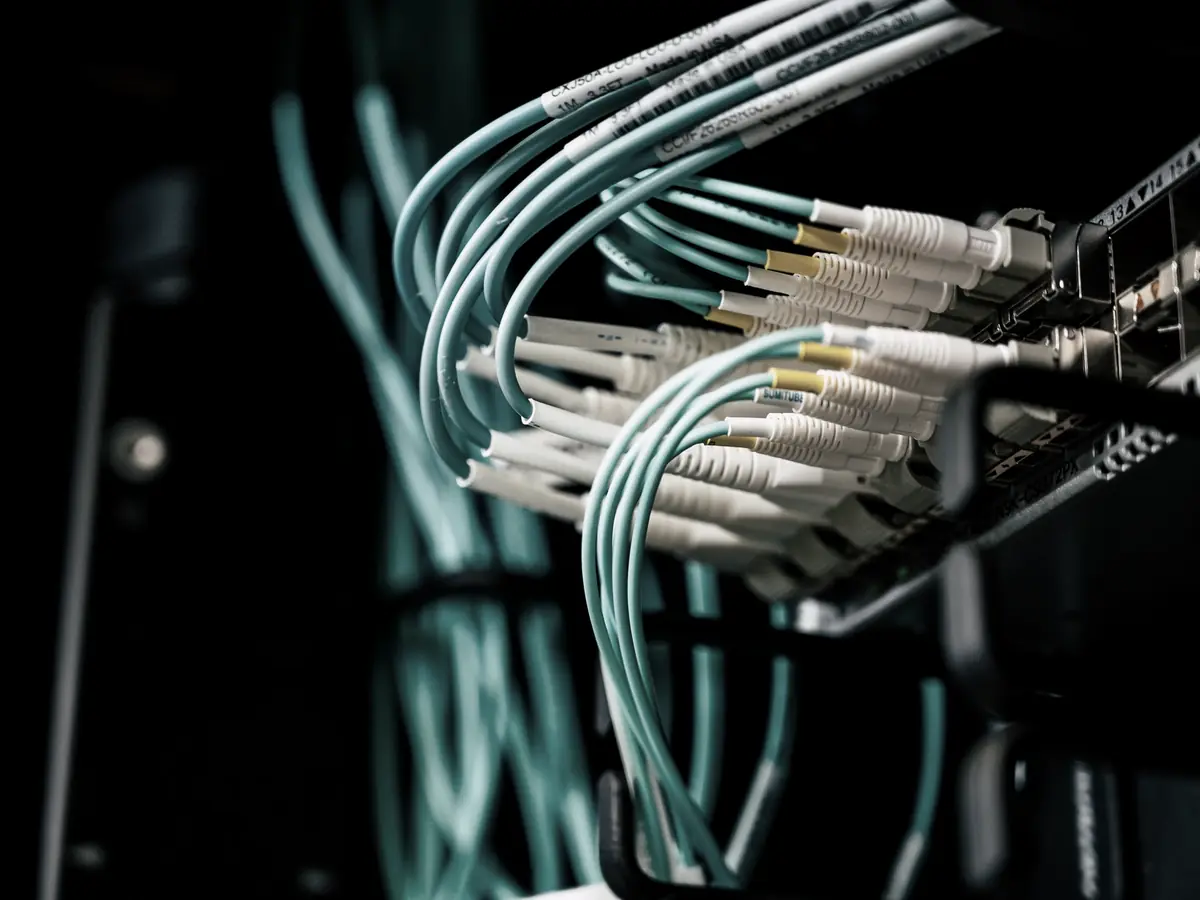
Fibre patch leads fanned out of a switch in a dark cabinet

Overview

Most teams build great models and then struggle to ship them. MLOps and DevOps infrastructure is the gap between a working Jupyter notebook and a reliable production system. We provision GPU clusters, build CI/CD pipelines, and architect Kubernetes deployments — including air-gapped environments for classified workloads.

The Problem

ML teams spend more time managing infrastructure than building models. GPU costs spiral. Deployment takes weeks. Experiments are not tracked. Models that work in dev break in prod because the environment is not reproducible. DevOps teams that do not understand ML end up with ML pipelines that do not account for model drift, dataset versioning, or inference latency budgets.

Our approach

We treat ML infrastructure like production infrastructure. Reproducible environments via Docker and Conda. MLflow for experiment tracking and model registry. Terraform and Ansible for infrastructure as code. Kubernetes (including air-gapped distributions) for orchestration. GPU cluster provisioning and decommissioning for training runs. Cost monitoring and FinOps tooling so you know what every training run costs.

Deliverables

  • CI/CD pipeline design and build
  • GPU cluster provisioning
  • Air-gapped Kubernetes deployment
  • MLflow model registry
  • Terraform & Ansible IaC
  • Cost monitoring & FinOps

Tech stack

DockerKubernetesTerraformAnsibleMLflowAWSGoogle CloudCI/CD PipelinesGPU ClustersAir-gapped DeployRedisPostgreSQL

In practice

Throughput is proven before procurement is signed

We size the node against the workload you actually have — sustained inference, not a benchmark burst — and demonstrate the figure before a capital request goes in. That exercise is where the real bottleneck appears. On ICCS, 80 configured cameras run on a single GPU node with roughly 15 to 20 concurrently active 1440p streams, and the ceiling turns out to be CPU rather than GPU; the fused eight-model detection stack needs about 28 GB of VRAM. Both are facts you want from a bench, not from a board paper.

One artefact, five ways to run it

A build that runs in exactly one environment is a handover problem waiting to happen. ICCS ships to run natively, in Docker on CPU or GPU, on Windows under WSL2, and fully offline as a systemd service — with PostgreSQL 16 in production and SQLite as a native development fallback, so a new engineer is productive on day one. Infrastructure is defined in code, Terraform and Ansible or AWS CDK where the platform is AWS, because an environment described in a wiki page is an environment nobody can rebuild.

What is watched, and what trips

Monitoring earns its place by isolating a fault, not by reporting it. Host CPU, RAM, disk and GPU are instrumented, and so is the signal most ML systems leave out: whether the inference engine is alive rather than merely quiet. ICCS carries a per-camera circuit breaker, an engine liveness heartbeat, and tamper and blind-spot detection, so one bad input is cut out instead of taking the pipeline with it. Health is reported monthly and a blocker is escalated inside 24 hours.

Delivery engineering is where the schedule lives

Most of a programme’s slip sits in the pipeline rather than the product. Telecom rollout automation cut network rollout time by 60% through CI/CD pipelines. A fintech platform migration onto Red Hat cloud improved uptime by 40% and cut infrastructure cost by 25%. We hold an 80% unit coverage floor and ship a working build every fortnight. Our engineers hold RHCE, RHCSA, RHCA and OpenShift Administration certification, so the Linux and container layer is supported by us directly rather than resold from someone else’s contract.

Where this has run

ICCS

Deployment and observability for a real-time AI platform with no network path: native, Docker on CPU and GPU, WSL2, and fully air-gapped as a systemd service.

80 cameras on one GPU node, about 28 GB VRAM for the fused eight-model stack, per-camera circuit breaker and engine liveness heartbeat. Release v1.25.2, 27 June 2026.

Krida AI

Platform operations for a national athlete and federation system across 28 disciplines.

1.4 million+ registered athletes, coaches and administrators at 99.97% uptime over three years.

GamesTheShop

Microservices commerce platform on an ECS Fargate cluster provisioned by AWS CDK, with Multi-AZ RDS Postgres 16, a two-node search tier and NAT per availability zone — we own the architecture and run the infrastructure.

48,000 concurrent users on launch day at a 1.1-second page load, and a 34% conversion lift. Architecture verified in production, 3 July 2026.

Questions

What buyers ask about this specifically.